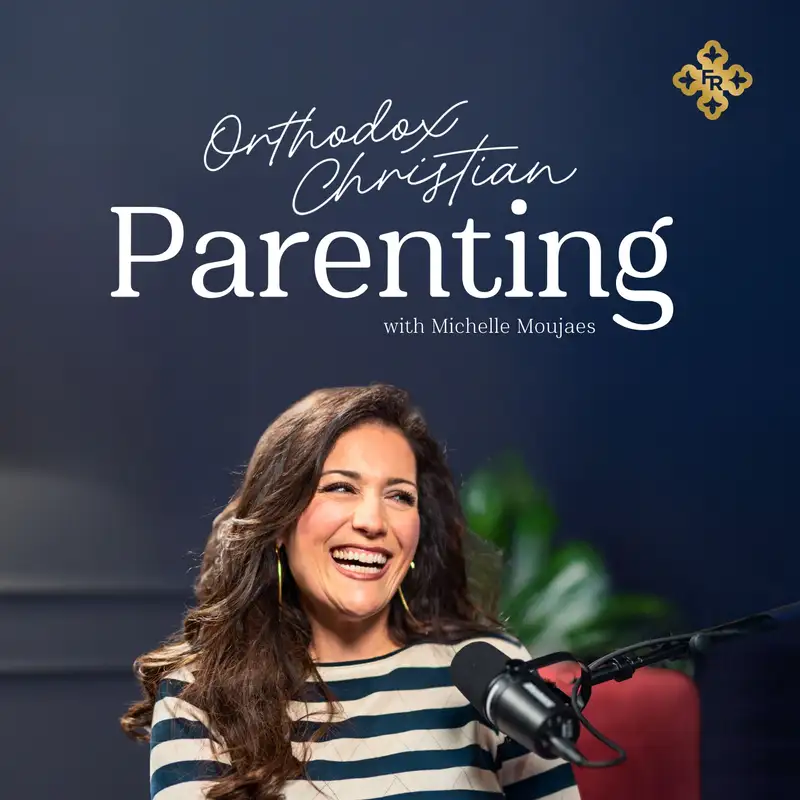
Welcome back to another special edition of Orthodox Christian Parenting. We are in our Summer Clips series and looking back at some of the most impactful conversations from the past season as we gear up for season three. So today, we are revisiting a conversation with Liz Caddo that looks at the heart of our priorities as parents. In a world that is obsessed with performance, Liz reminds us that who our children are becoming is infinitely more important than the grades they receive at school. She talks about how we can help our children find their identity in Christ rather than in their achievements and why it's so important to let our kids experience and learn from their own mistakes.
Michelle Moujaes:It's a message every parent needs to hear as we prepare for a new academic year. So let's jump in. What does that term mean, education as formation?
Liz Caddow:An education really is a transforming process for a child. And honestly, what we're talking about is when we're educating a person, we're talking their heart, mind, and soul, and transforming them or helping them be transformed in who they're supposed to be in Christ. And education, yes, is about knowledge and gaining knowledge, but it's knowledge that can lead towards wisdom. And does that help with one's virtue and who they're going to be as a person in what it ultimately means for them, say, at the end of their formal education. But we know as adults now that we're always learning, we're always learning and transforming hopefully in who we think Christ is calling us to be now at this stage.
Liz Caddow:So it's an ongoing process of transformation. Our culture at large thinks education is about knowledge and what college and, you know, what kind of job they're going to have. And, yes, that hopefully is becomes an outcome of it, but it's not the main fruit. The main fruit needs to be who who are they in Christ? What kind of person are they, say, when they get to college, if they choose college?
Liz Caddow:Are they seeking the good life? The light which means to live the good life, a life of virtue.
Michelle Moujaes:Mhmm.
Liz Caddow:To truly be happy, one must be virtuous. And what does that mean? I love processing that with my honors government class when we talk about the unalienable rights. Right? Right to life, liberty, property.
Liz Caddow:Jefferson changes it to the pursuit of happiness, but what the founders meant by that had to do with virtue.
Michelle Moujaes:Okay. Well, tell me, what is virtue? Like, process that with us.
Liz Caddow:Oh gosh. Well, what do you think it means to be to live a life of virtue?
Michelle Moujaes:So I'm not gonna speak for all Orthodox Christians right now. So whoever's watching this, and if you're a priest, be gentle with me. But I think virtue is really pursuing Christ likeness.
Liz Caddow:Yeah. You know? All of all of
Michelle Moujaes:the gifts of the spirit that you hear about in Galatians, the 70 times seven that we forgive. It's all of those things that bring us like Christ, patience, peace, kindness, gentleness, self control, those those virtues that, lead us more into thinking, doing, being more like him.
Liz Caddow:Well, yes. And it's interesting because one of the I hope it's okay that I keep talking about my class.
Michelle Moujaes:Yeah. Yeah. It's great. It's great.
Liz Caddow:One of the very first things we do in my honors government classes, look at a painting. It's an allegory of the good good government versus bad government by Ambrosia. And it's on the it's a fresco on the walls in Siena, in one of the special buildings in Siena. And, the good government is has the all the virtues sitting properly in their place, faith, temperance, justice, peace, like all of it. It shows how the city prospers when those leading are valuing those things.
Liz Caddow:Those virtues and what happens. And then on the other side, it shows what happens to the city when the leaders aren't living out of that and virtuous, and then tyranny takes over and justice is bound and, all those things. So it really, is about that when it comes to one's education. Will it lead towards that as it relates to being a virtuous person? And then, of course, for us at our school, we talk about virtue, wisdom, purpose, and courage because you can't all those things are connected.
Liz Caddow:The other thing that I would do differently as a parent a second time around is especially for and it's the advice I give now to my mothers at school that have rising logic schools and high school students is that moms need to decrease and dads need to increase when it comes to their sons.
Michelle Moujaes:That's so good. Wait. Let me say it back. Let me say it
Liz Caddow:I don't know about that.
Michelle Moujaes:Going into high school
Liz Caddow:Going into junior high.
Michelle Moujaes:Junior high and high school, moms need to decrease, and dads need to increase for
Liz Caddow:their sons. Dads need to take the lead on everything for their sons.
Michelle Moujaes:That's so good.
Liz Caddow:And moms need to back off and and be quiet. Oh, wow. Sorry.
Michelle Moujaes:Wait. No. That's so good. But can you just say why? I mean, I have three boys and I
Liz Caddow:know moms can do the things that, you know, help us, help them. I knew for my son I needed he always needed three lunches, basically.
Michelle Moujaes:Yeah. Yeah.
Liz Caddow:There's have an extra one, that, all the things he needed for his sports, and and things of that nature. But I would have mister Caddo do all the conversations with the teachers. He would do the bring down the consequences and the discipline, and I would do that better next time around. I that's what he did, but I still would try to
Michelle Moujaes:interject. Place. Yeah. And and
Liz Caddow:say, woah. What about this? What about that? And and sometime and it wasn't helpful. And and ultimately, it wasn't helpful for my son.
Michelle Moujaes:Interesting. I love that. That's not the one I would have expected, but I I mean, I think it's true for so many of us because
Liz Caddow:and moms need to stop let their boys fail and not try to baby them. Mhmm.
Michelle Moujaes:So true.
Liz Caddow:Am I gonna get in trouble?
Michelle Moujaes:No. I'm sitting here judging myself because it's really hard. It's really hard. It's very hard.
Liz Caddow:It's hard for us as women.
Michelle Moujaes:Yeah. And it's really hard. We've talked about it on the show a million times. When our children are in pain, it's almost more than we can bear. Mhmm.
Michelle Moujaes:I hate it when my kids hurt. Mhmm. And I almost would do a lot of things to stop it.
Liz Caddow:Especially moms with their sons. Yeah. Mhmm.